The Hummingbird Program gives some of Brazil’s runaways paintbrushes and a chance to fly. But around the world, flowers-selling masks the conditions of children on the streets.
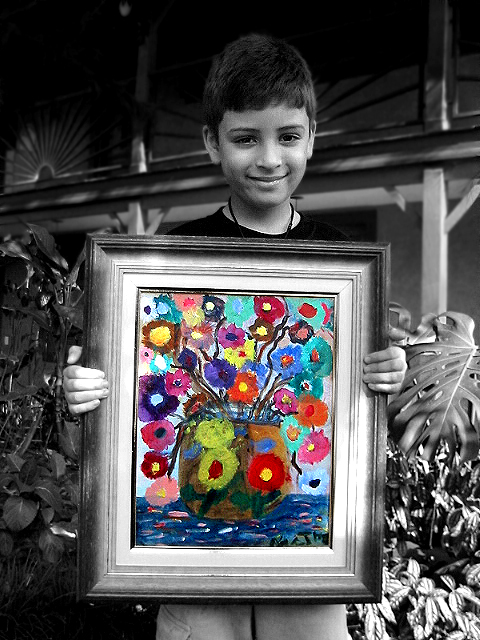
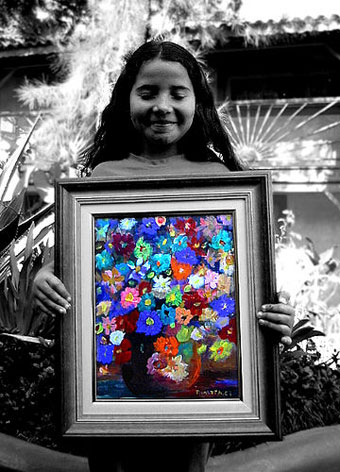
Thalyta Nere de Lima, 9, and her painting
Photo: Hummingbird Activity Center
Here—para voce (for you)— are bouquets from Brazil.
This gallery of still life painters and paintings is a gentle awakening to some jagged realities of life in Sao Paulo, the third largest city in the world. Just under 18 million people live here (2006), most notoriously, thousands of children who live on the streets.
In 1993 Gregory J. Smith, a former art dealer, moved to the megacity and began working with runaways, establishing a Children at Risk Foundation here (Smith had set up such a foundation in Norway a year earlier).
CARF’s goal, now as then, is to defend the rights of Brazil’s street children, to offer them “a dignified and definitive solution” to a universal childhood problem: finding a healthy environment—familial and social—where they can grow.
A 1997 study by Brazil’s Peace and Justice Center found, to many folks’ surprise, that lots of Sao Paulo’s street children have “structured families” and parents with jobs. The study concluded, “It is not the family structure which generates street children but the lack of public leisure areas, culture and education which (should) occupy the free time of these youth.”
CARF responded with the Hummingbird Activity Center in 2001. Taking this step, the organization expanded its programming from 80 children to more than 600 by 2004. Hummingbird (Beija-Flor, in Portuguese) focuses on sports, art and vocational training, addressing children not so much as problems to be fixed but as people with minds, energies, and strivings.
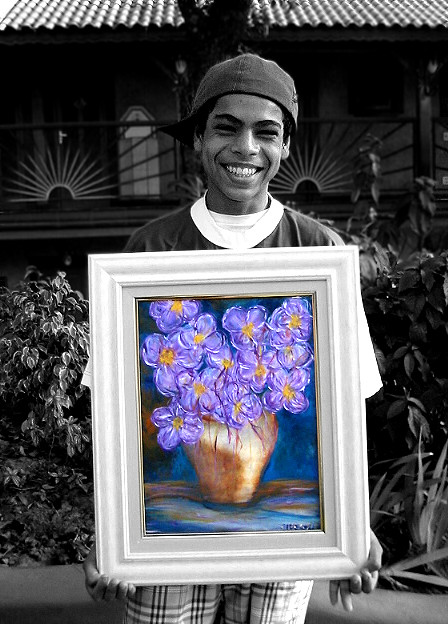
Flowers by Cledson
Photo: The Hummingbird Project
Ordalina Candido Felipe, a teacher at Hummingbird has written, “For youth of the urban periphery, art constitutes safety and implies that they are not frightened to tread in other territories. But to be able to reach that goal, they need to work extensively.”
How beautifully Smith and his associates have set those energies in motion with this flower painting project. We’re eager to learn more about the assignment and its outcomes. Beija-Flores, please be in touch.
These seem to us portraits of psychic healing. Move over, Odilon Redon.
(Originally published: HFP January 8, 2006)
Update: Gregory John Smith’s original project has further evolved into the Bejia-Flor Cultural Network.
From what we can tell, it’s still attempting a wrap-around for stranded children, providing health care, recreation (with emphasis on arts endeavors like the flower paintings of 2006), education and literacy for younger children, and adding job training for older teens. It appears, however, that the organization no longer houses the children it serves.
A stunner.
Blinded by the beauty of pictures of children with their imaginary bouquets, we had imagined a different reality.
As the earlier story intimates, many of Sao Paolo’s street children are not, in fact, homeless (though many are). Rather their families have pressured them to work selling candy, pencils and flowers for meagre financial support. The World Health Organization and many social scholars now distinguish between children OF the streets and children ON the streets — those who may be without families or homeless and those whose families have forced them to work.
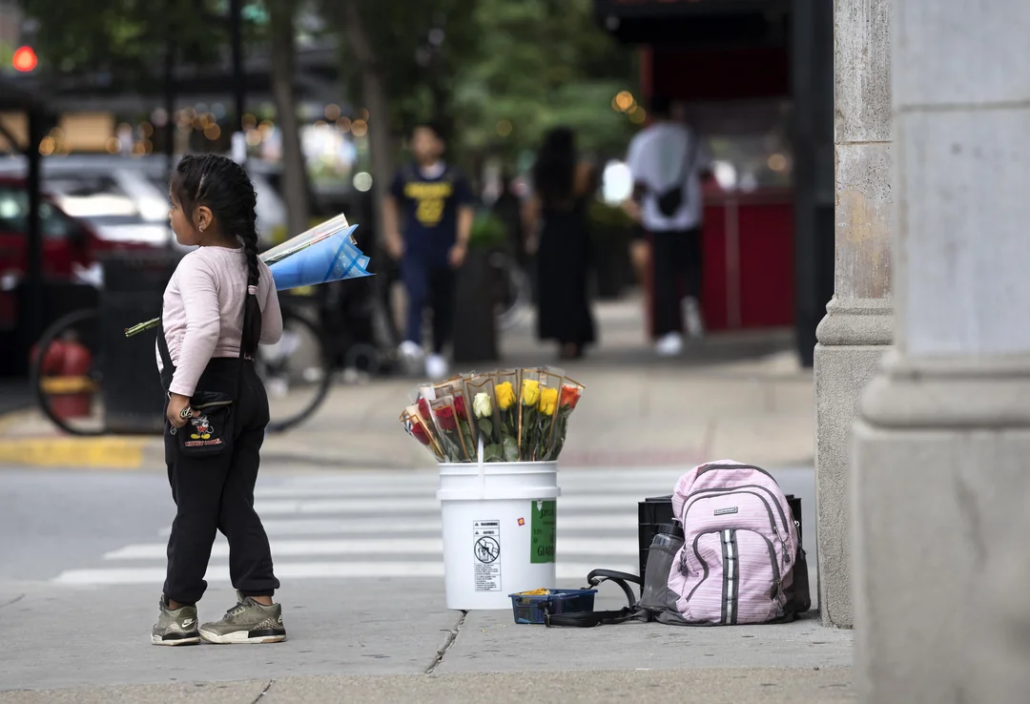
Child selling flowers on the North Side of Chicago
Photo: Chicago Tribune
Sao Paolo isn’t the only city where children are turned into peddlers. The Chicago Tribune ran a story (behind a firewall) in August about the many child vendors at busy intersections on the city’s North Side. Yes, U.S. laws prohibit child labor, but the Tribune story trained its report on the violent dangers these children face nonetheless, especially at night. A Chicago TV station aired video of one child being attacked outside a North Side bar in the very early morning.
In Brazil, there have been thousands of children living on the streets at least since the 1980s (the crisis that inspired Gregory Smith’s program). Sao Paolo street children have received the most public notoriety but there are many other nations with “intractable” problems.
In Thailand, according the Mirror Foundation, thousands of Burmese and Cambodian children are forced into labor.
Witanapat Rutanavaleepong “estimates there are at least 1,000 child beggars and flower sellers working in cities and tourist spots around the country.” In two years of work with the Mirror Foundation, “Witanapat has come across only one case” involving Thai children.
” ‘The authorities do not see it as a problem that affects their future or society,’ Witanapat said. ‘They see them as only child beggars, but the girls and some boys often go on to become sex workers, and the boys often become traffickers themselves.'”
It’s plain that obliviousness and outright hostility toward immigrants is damning many street children to life on the streets.

10 year old Youssef, a refugee from Syria, sells roses with his younger brother on the streets of Beirut, Lebanon.
Image: Deutche Welle
Listen to these two Syrian brothers, children “on the streets” whose parents have forced them to sell flowers day and night in Beirut, Lebanon. “I work because my parents are sick. I need to support them,” says Omar, age 6. Older brother Youssef, age 10, disagrees. He says Omar “should be able to stay at home even if my mother and father are sick….. they should work to be supporting us not the other way around.”
In Mexico, South Africa, Bangladesh…many nations, street children are selling flowers. It’s a tragic trade that strikes at the heart of our fixation on the Human Flower Project:
Beyond the natural realities of botany and horticulture, flowers have a social ecology. Nearly always they fulfill two agendas at once: attraction and disguise.
These effects seem contradictory but not so. Consider how elaborate floral swags, archways and bouquets transform an ordinary hotel meeting room into a wedding “wonderland.” Or more viscerally, how the overpowering scent of roses, freesia, and lilacs once camouflaged the smell of a corpse and even today muffle the ugliness of death.
This HFP article about the red poppy emblem and its capacity to “gentle” to the reality of war bespeaks the same sleight-of-hand.
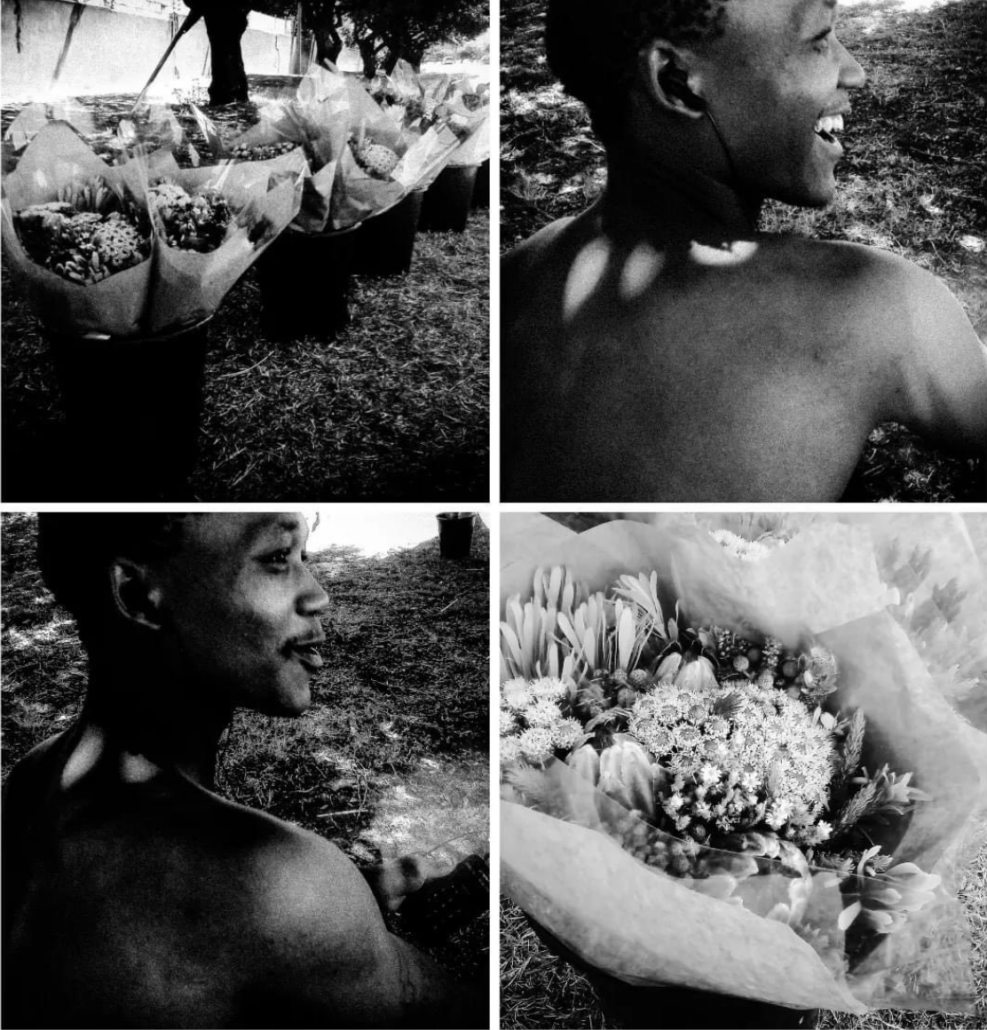
We’ve been reading through some online commentary from customers who’ve bought flowers from children on the street or at least taken notice of them. There’s this strange dynamic: look and overlook.
This writer, from Cape Town, is drawn in and encouraged by what he sees:
Took this photo a year ago, stopped and bought flowers from this kid.
End up his (sic) from a rough neighbourhood in Cape Town !! Not surprise🙁
But his smile is what got me, how happy it makes him selling flowers rather than selling or shooting guns hurting innocent people
His words not mine !!!
This piece from the Tribune in Lahore, Pakistan attests that flowers make it possible to look away from what’s actually taking place in these encounters. Reporter Asif Mehmood concludes, “While some genuinely appear to be street vendors, in several cases the emphasis is on describing poverty and hardship rather than selling the product at its actual value.”
The loveliness of a flower is more approachable than an empty, outstretched hand. Mehmood calls it “disguised begging.”
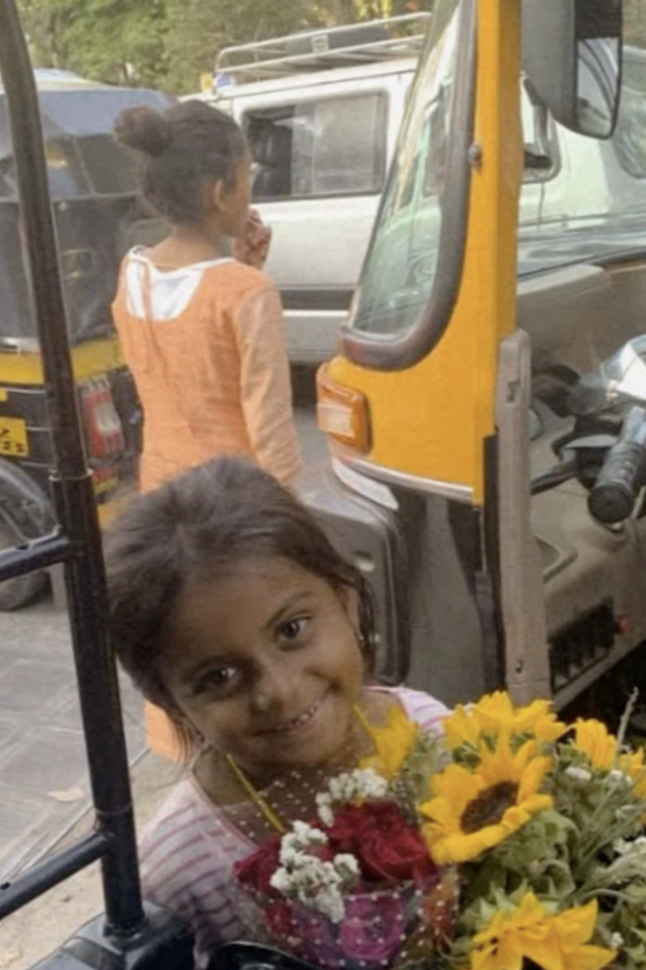
Tiny flower seller approaches customers on a bus
Photo: liquor and latinas
Here is brief slideshow of images showing children selling flowers on the street (if only we knew where they were!)
It’s accompanied by musings from Mateo Nieto that reads to us like a prose poem:
a child selling flowers at a traffic signal occupies one of the strangest positions in society.
they stand at the intersection of love and transaction.,,,
Nieto ingeniously shifts the point of view. He suggests that these children inevitably can see and know more about the passers-by, purchasers, sympathizers, attackers, than any customer could know of them.
… the more i thought about it, the less this felt like a story about flowers.
it felt like a story about observation.
Read on… beyond the smiles and blossoms.


Leave a Reply