France’s desalpe, Austria’s almabtrieb, and Germany’s viehscheid overflow with richness. They’re all knockout celebrations with mirrored crowns, wildflowers, clarinets, and beer halls thronged with diners and singers. This fall we saw a less flamboyant but by means no less impressive seasonal livestock drive in Western Spain: the trashumancia, or transhumance.
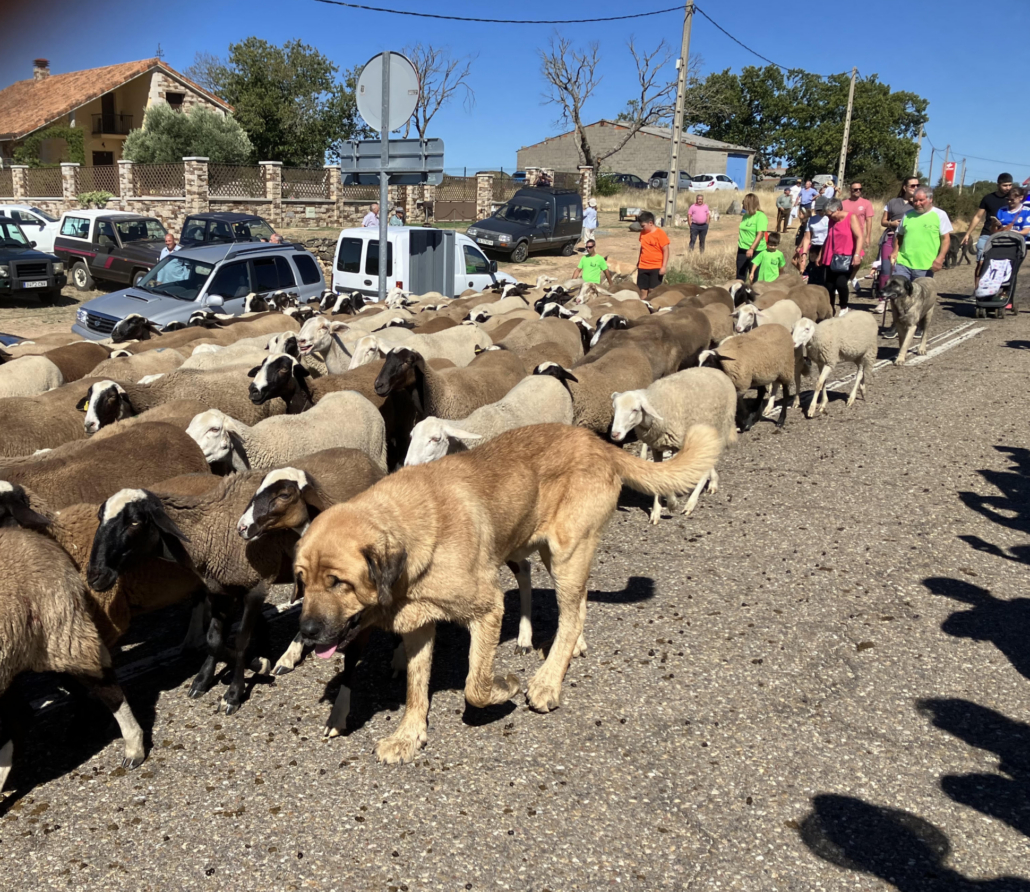 A Spanish mastiff walked along the herd as it came into San Vitero, Spain, September 19, 2026.
Photo: Bill Bishop
Like the customs of their more northerly neighbors, these are pastoral practices that date back hundreds, perhaps thousands of years. Priscilla Woolworth provides a good introduction. In Spain, however, moving herds back and forth — to higher, cooler pastures in spring and down to shelter for winter — takes places over weeks and scores of miles, along trails set down over many generations. Their power doesn’t lie in exuberance but in endurance.
Here’s a short video of showing about two thousand sheep coming into San Vitero, Spain, not far from the Portuguese border.
Just before noon, September 12, everyone crowded along the main road leading down from Mahide. A few police kept watch at the crest of the hill, and before long a few men came walking backward ahead of the giant herd of sheep. The animals formed a sandy river along the two lane highway, rumbling past and pouring into town. At the fairgrounds nearby, about a dozen young men and women joined the shepherds in separating the flocks: no brands on sheep, just splashes of blue, red, green and orange paint to distinguish which animals belong to whom. All are Churra sheep, a breed native to Iberia noted for (and named for ) their coarse wool.
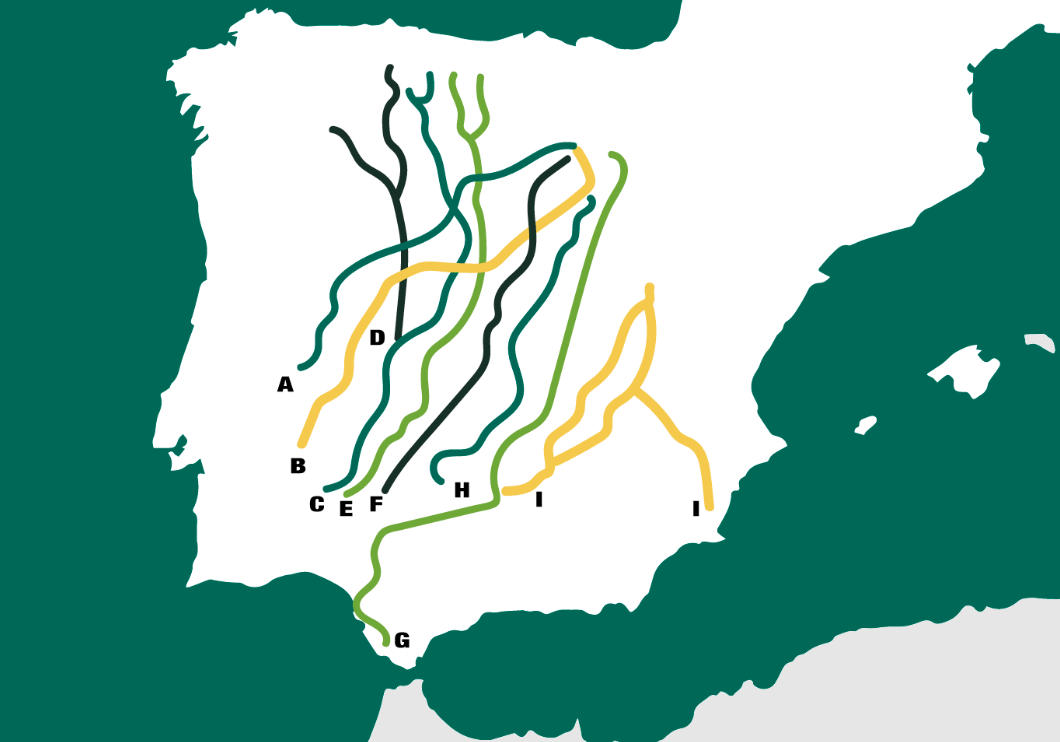
Trails of the transhumancia throughout Spain that are still traveled today.
Map: Trashumancia y Naturaleza
Some families still practice this seasonal work in the old way, camping out alongside the herd as it descends from the Sierra de Sanabria 60 miles to the north to the Aliste region of Zamora.
During the weekend festival, a short documentary ran non-stop in the fairgrounds community center, portraying the trashumancia as a distinctive, strenuous and rapidly-disappearing way of life, but we were the only ones watching as a few giggling schoolgirls threaded among the rows of seats in game of chase. Instead, San Vitero was crowded with farm family reunions, fish, nut and gem sellers, vendors of leather wallets, and bee-keepers selling honey and golden, owls-shaped candles.
How many families are continuing the semi-nomadic life of the transhumance? Hard to know. The number of churrero families continues to dwindle as the work grows ever less “rentable” (profitable). According to wiki, “With the rise of modern precision livestock farming technologies, even some herders can work from home using GPS tracking, virtual fencing and agricultural drones, and only need to perform routine (typically daily) or emergency field visits via motor vehicles to personally tend the herds and then return home after the work is done.”
We saw no traces of high-tech transhumance in San Vitero. Instead there were shepherd’s canes being thwacked on the highway and a few giant, docile dogs, none of whom seemed to need a word of direction.
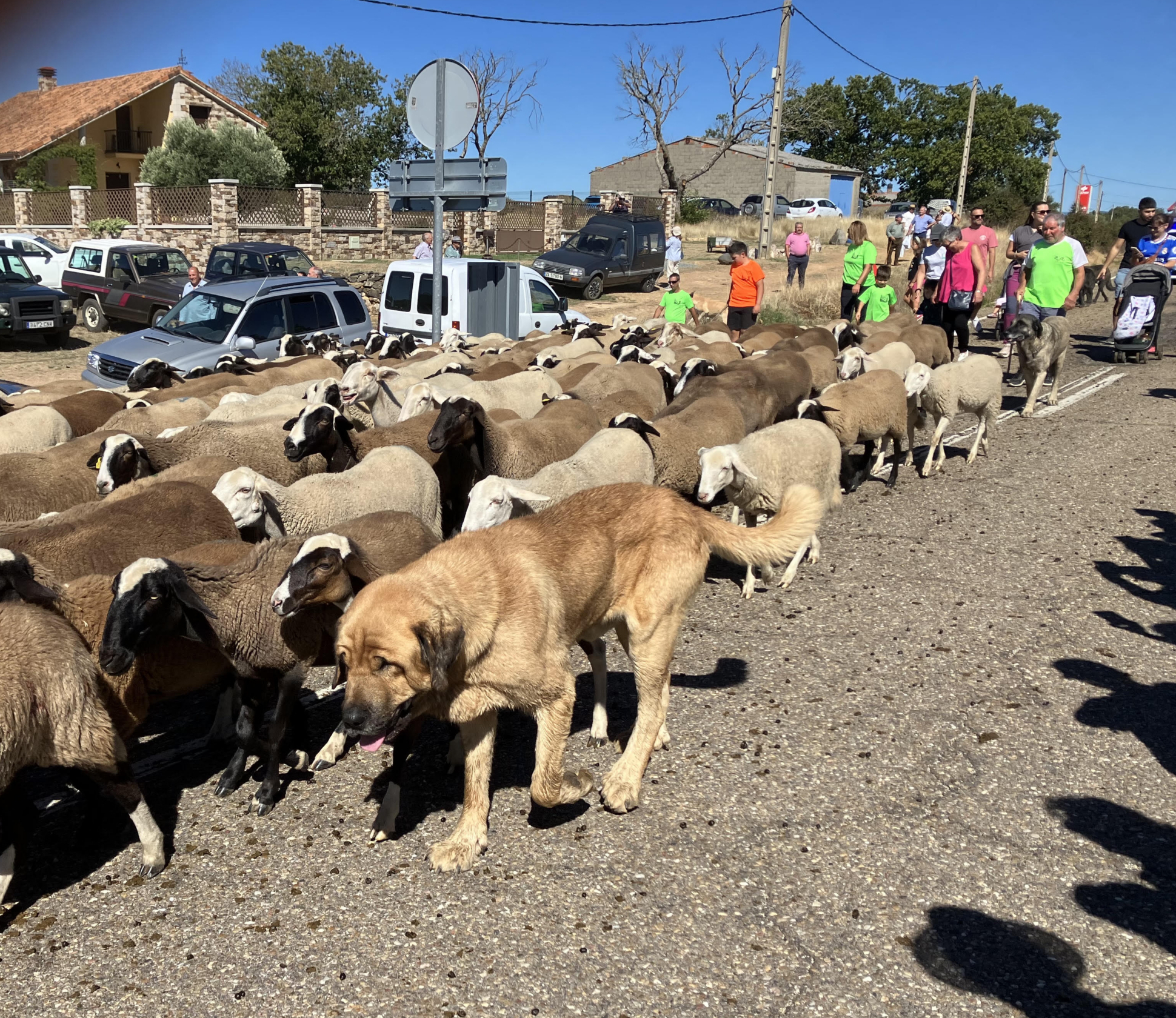
A Spanish mastiff walked along the herd as it came into San Vitero, Spain, September 19, 2026.
Photo: Bill Bishop
The mayor of San Vitero, Vanesa Mezquita, concedes that the city now partly underwrites the livestock drive.
“I don’t know who has the magic wand, but for this to continue, someone has to support them.”
As a floral festival, this was nothing like the Alpine customs we’d admired. However, we have learned that the trashumance is its own subtle and more profound human flower project.
Conservation scientists have found the trashumancia links mountain and lowland ecosystems for the benefits of both. Priscilla Woolworth writes:
“As livestock move from one area to another, they reduce pressure on the land, as excessive grazing can lead to species extinction and soil erosion. At the same time, grazing along the droveways helps to keep the trails clean, stop forest fires and contribute to tree regeneration.”
And indeed, this fire-prone region of Spain needs all the help it can get.
She adds, “Transhumance also protects biodiversity. The livestock carry seeds in their stomachs and also in their hooves, which are transported for hundreds of miles, enabling species to spread.”
We can appreciate these thousands of hooved animals for their brush clearing, tilling, sowing and fertilizing.
What looks on its face like “primitive” animal husbandry is in fact a multi-faceted tradition that over generations has sustained the wildflower diversity of Iberia.
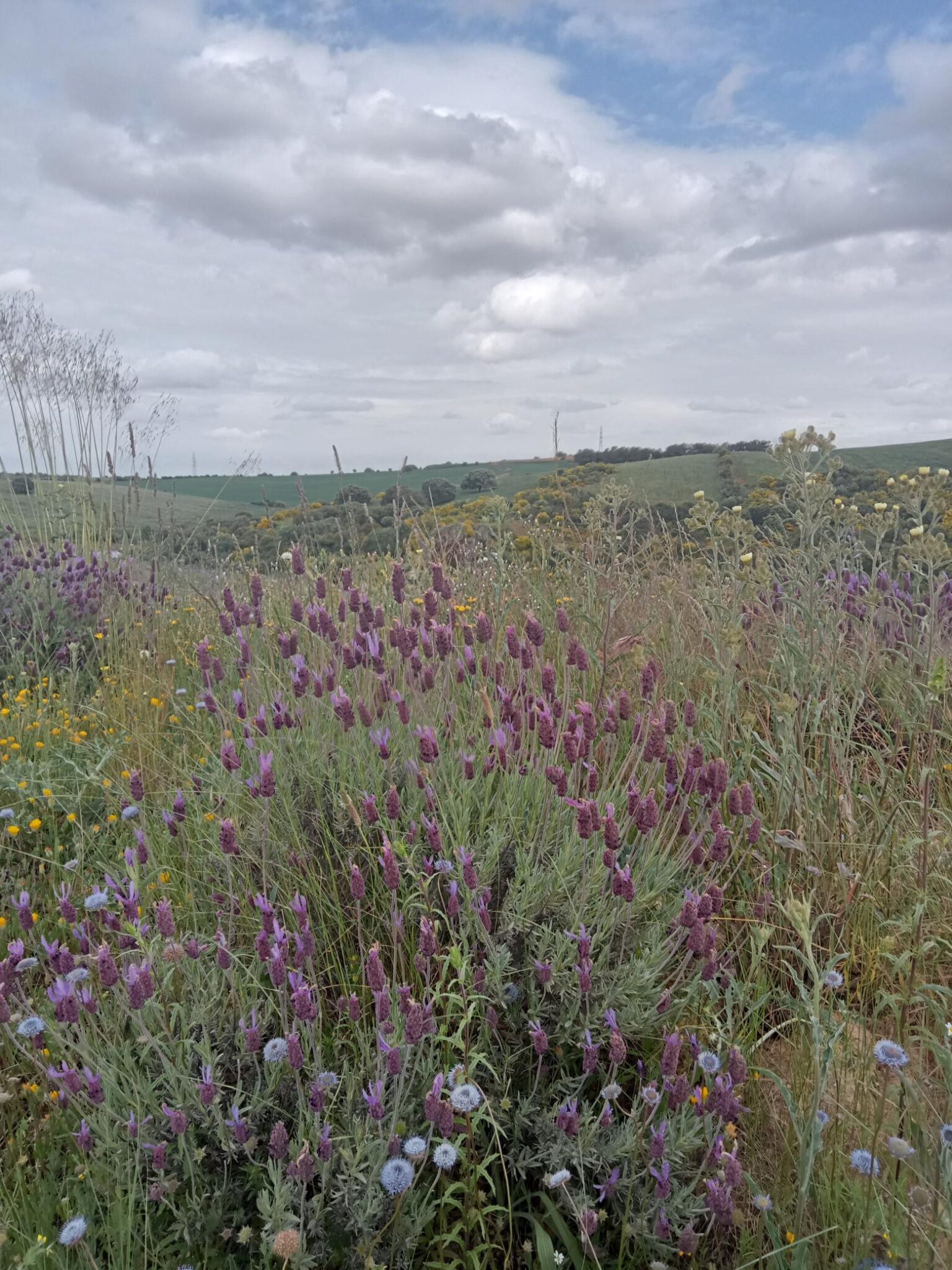
Wildflowers of Zamora, propagated and fertilized by the herds of trashumancia.
Photo: Asociación Zamorana de Guías de Turismo
The United Nations has named 2026 as the International Year of Rangelands and Pastoralists. Think about the factory farms in the U.S., where tens of thousands of hogs and and cattle eat processed food their whole lives long and never see the light of day. The ancient practices of transhumance may not be financially viable but they do give the world a different vision of what healthy rangelands and livestock husbandry — and strong human communities — have been and perhaps can be.


Leave a Reply