How do golfers sleep knowing their perfect playgrounds are poisoning the soil and water? Their association is paying plant scientists for help.
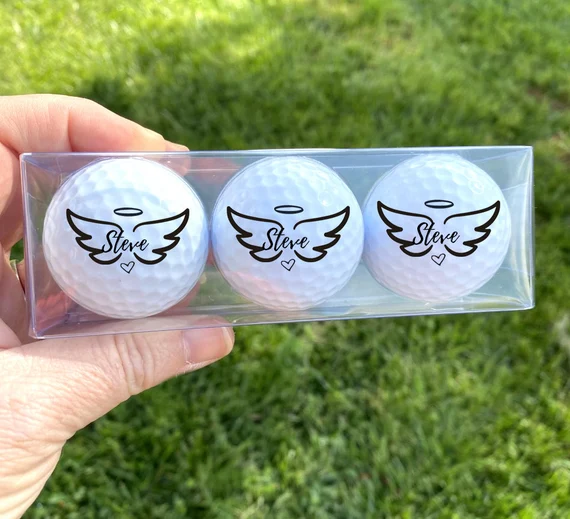 memorial golfballs
There are many people, or at least one, who believe that golf and all involved in the sport need redemption.

Univ. of Mass turfgrass research station, S. Deerfield: blue flag iris to the rescue
Photo: Guy Lanza and John Clark
When our life partner took to the game many years ago, we were incredulous. How could anyone so hip, young, and intelligent – “pre-redeemed” – consider it? Here was all we despised. Exclusive clubs, plaid pants, high balls at the “men’s bar,” little leather gloves with snaps, people who voted for Goldwater….
But back then most of us, or at least one, were too dense to recognize that the real problem with golf wasn’t social but environmental. Setting aside for now the land use question, here is a major source of soil and water pollution, disguised as a green carpet ride. Even a dozen years ago, wiser ones knew that maintaining the perfect turfgrass of “a single course averages about a half ton of chemical pesticides a year.” Multiply that times 16,000 in the U.S. alone (the # of golf courses in 1996 — that many still in 2025).
If the toxins stayed put it would be bad enough, but they don’t. Environmental researchers have learned that “5 percent to 10 percent of the total pesticides applied are lost in runoff.
In worst case conditions, this figure can be as high as 30 percent.” So says John Clark, principal investigator in a new study of the problem at University of Massachusetts, Amherst. The effects on streams and rivers are well documented, and awful. The impact on human health has yet to be determined. (The study was confirmed in 2020 )

Golf course with blue flag iris, Ocala, Florida
Photo: Maureen Morris Edwards
But Clark and his team think they may have found a partial solution – purgatory via flowers. They’ve identified plants that “can reduce the amount of certain pesticides in soil by up to 94 percent in the greenhouse”; this summer those species will be tested outdoors, at the U. Mass turfgrass research center in South Deerfield.
The researchers chose beautiful plants with large root systems – species with appearances to improve golf course aesthetics (?) and with bigger roots to filter toxins that run off the turf.
“Blue flag iris (Iris versicolor) was the clear winner, able to reduce levels of the commonly used insecticide chlorpyriphos by 76 percent and levels of the widely used fungicide chlorothalonil by 94 percent in soil after three months of growth,” they reported.
Planted in “vegetative filter strips,” other plants that performed well in greenhouse trials were eastern gama grass (Tripsacum dactyloides) and big blue stem (Andropogon gerardii Vitman), a native of the tallgrass prairie.
The U.S. Golf Association chipped in funds for the research, thus the experiment smacks a bit of old-time “indulgences”: there’s a long history of paying for one’s redemption. There are also alternative routes to heaven – even for golfers. One is in evidence at Temple Golf Club in Berkshire, England. Here, golfers play on a course of native plants rather than manicured lawn.
Robin Paige writes,
“On my first visit to Temple the rough was in full bloom, with large numbers of beautiful spotted and pyramidal orchids. There were masses of the flowers of high summer, including field scabious, ladies’ bedstraw, wild carrot and several varieties of clover.”
With links like that, we might even take up the sport!
Club member Malcolm Peake became disgusted with the “totally synthetic” courses in the U.S. and, working with course manager Martin Gunn, forced the issue of plant and animal wildlife conservation. Since they took charge, not only have the wildflowers and butterflies returned, “water consumption on the course has been reduced by 65 per cent, fertiliser by 60 per cent and pesticides by 72 per cent.” Plus the sport itself (yawn) is more interesting. “The British game is based on bumping the ball along the ground, while the American is more aerial,” says Gunn. “A natural course confronts the golfer with far more options and choices, which requires much more skill.”

Nine-hole course, near Poynton, England
Photo: Andrew Denny/Granny Buttons
Ok. Which makes more sense: to work with the native habitat, skip the chemistry, and challenge the athletes or to continue pouring pesticides and water on their playgrounds and then pay university researchers to chase down plants that might absorb all that poison?
While you’re thinking about that, here’s another alternative, also from England…What may be the world’s smallest golf course, and a beauty. Nine-holes with topiary and flowerbed bunker by Smiths Bridge, Macclesfield Canal, near Poynton.


Leave a Reply